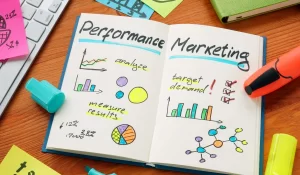

Performance marketing for ecommerce focuses on measurable, ROI-driven strategies like paid ads, retargeting, and CRO to increase conversions and reduce acquisition costs. By analyzing real-time data and optimizing campaigns, ecommerce brands can scale profitably while ensuring every click and impression contributes directly to revenue growth.
What Is Performance Marketing in Ecommerce?
Performance marketing is a results-based approach where you pay only when specific actions are achieved — like clicks, leads, or sales.
Unlike traditional marketing, which focuses on brand awareness alone, performance marketing connects every campaign directly to revenue.
For ecommerce, this means:
- Every rupee/dollar spent drives a measurable outcome
- Marketing efforts are continuously optimized based on data
- You can scale campaigns that perform — and stop those that don’t
Why Performance Marketing Matters for Ecommerce
Ecommerce is one of the most competitive digital spaces. Shoppers compare products across multiple platforms, and customer acquisition costs are rising fast.
Here’s where performance marketing makes the difference:
- Precision targeting: Reach the right audience at the right time.
- Data transparency: Every campaign provides insights to refine strategy.
- ROI tracking: Know exactly which channels generate profit.
- Scalability: Scale campaigns that convert best and pause poor performers.
In short, performance marketing ensures every penny contributes to your growth.
1. Leverage Paid Search Campaigns (Google Ads)
Paid search or PPC (Pay-Per-Click) campaigns are one of the strongest tools in performance marketing.
When a user searches for a product similar to yours, your ad can appear at the top — instantly capturing purchase-ready intent.
Key steps for success:
- Use high-intent keywords like “buy,” “discount,” “best price.”
- Optimize product feeds in Google Shopping campaigns.
- Run dynamic search ads to match real-time queries.
- Track conversions via GA4 or Tag Manager to monitor ROI.
Pro tip: Continuously analyze search terms to eliminate wasteful clicks and refine audience intent.
2. Build High-ROI Social Media Ad Campaigns
Social platforms like Meta (Facebook/Instagram), TikTok, and Pinterest are ideal for ecommerce brands to reach potential buyers visually and emotionally.
How to maximize returns:
- Use product carousels or video ads to highlight features.
- Create lookalike audiences based on your top buyers.
- Use retargeting campaigns to bring back cart abandoners.
- Track performance with Meta Pixel and optimize creatives regularly.
Social media ads don’t just drive clicks — they build awareness and influence purchase intent.
3. Retarget Abandoned Carts Intelligently
On average, 70% of online shoppers abandon their carts before checkout. Retargeting is the key to converting them.
Effective retargeting strategies:
- Show dynamic ads featuring the exact product left behind.
- Send personalized emails or push notifications with limited-time offers.
- Use multi-channel retargeting — combine Google Display, Meta Ads, and email for stronger recall.
The goal isn’t to spam but to re-engage with value — like an exclusive discount or free shipping.
4. Collaborate with Affiliate and Influencer Networks
Performance marketing extends beyond paid ads — affiliates and influencers can bring high-quality traffic through trusted recommendations.
For affiliates:
- Partner with coupon, cashback, or product review sites.
- Offer commissions only for verified sales.
- Use affiliate tracking tools to monitor conversions.
For influencers:
- Work with micro-influencers who align with your niche.
- Use trackable links or discount codes to measure ROI.
- Focus on authenticity over reach — niche creators often drive better conversions.
These collaborations create a steady flow of organic and referral traffic while maintaining control over performance-based payouts.
5. Use Conversion Rate Optimization (CRO)
Performance marketing doesn’t stop at clicks — the ultimate goal is conversions.
That’s where CRO comes in: improving your website and landing pages to turn visitors into customers.
CRO best practices:
- Simplify checkout (fewer steps = higher conversions).
- Use clear CTAs like “Buy Now” or “Limited Offer.”
- Display trust signals — reviews, secure payment icons, and return policies.
- A/B test product images, pricing, and copy.
Even a small 1% increase in conversion rate can translate to massive sales gains over time.
6. Utilize Email and SMS Automation
Performance marketing thrives on personalization — and email/SMS automation delivers exactly that.
Tactics that drive ecommerce results:
- Welcome sequences for new sign-ups.
- Abandoned cart reminders with special offers.
- Product recommendation emails based on past purchases.
- Post-purchase follow-ups for reviews and upsells.
Each automation flow is measurable and designed to increase lifetime customer value.
7. Analyze and Optimize with Data
Data is the backbone of performance marketing. Without analytics, even great campaigns can underperform.
Metrics to track:
- Customer Acquisition Cost (CAC)
- Return on Ad Spend (ROAS)
- Click-Through Rate (CTR)
- Conversion Rate
- Lifetime Value (LTV)
Use Google Analytics 4 (GA4), Looker Studio dashboards, and UTM tracking to monitor all campaigns in one place.
This allows you to see which channels drive the most profit — and double down on them.
8. Scale What Works — Automate the Rest
Once you’ve identified high-performing campaigns, scaling is about consistency and smart automation.
How to scale effectively:
- Increase budgets gradually (10–20% every few days).
- Replicate top-performing creatives across new audiences.
- Automate bidding strategies with Target ROAS or CPA goals.
- Use AI-driven tools to predict trends and improve targeting.
Scaling isn’t about spending more — it’s about spending smarter.
Why Choose Anatomy of Brands?
At Anatomy of Brands, we specialize in helping ecommerce businesses grow through intelligent performance marketing strategies.
As Kolkata’s best performance marketing agency, we combine data, creativity, and automation to deliver measurable results that scale your ecommerce brand profitably.
Our team of strategists, designers, and analysts ensures every campaign is ROI-driven, transparent, and aligned with your business goals.
We don’t just run ads — we build sustainable growth systems for your brand.
Final Thoughts
Performance marketing isn’t just a tactic — it’s a growth engine for modern ecommerce brands.
By combining paid media, retargeting, influencer partnerships, CRO, and data-driven optimization, you can turn every click into measurable business growth.
Here’s a quick checklist to help you get started 👇
Performance Marketing Checklist for Ecommerce Success
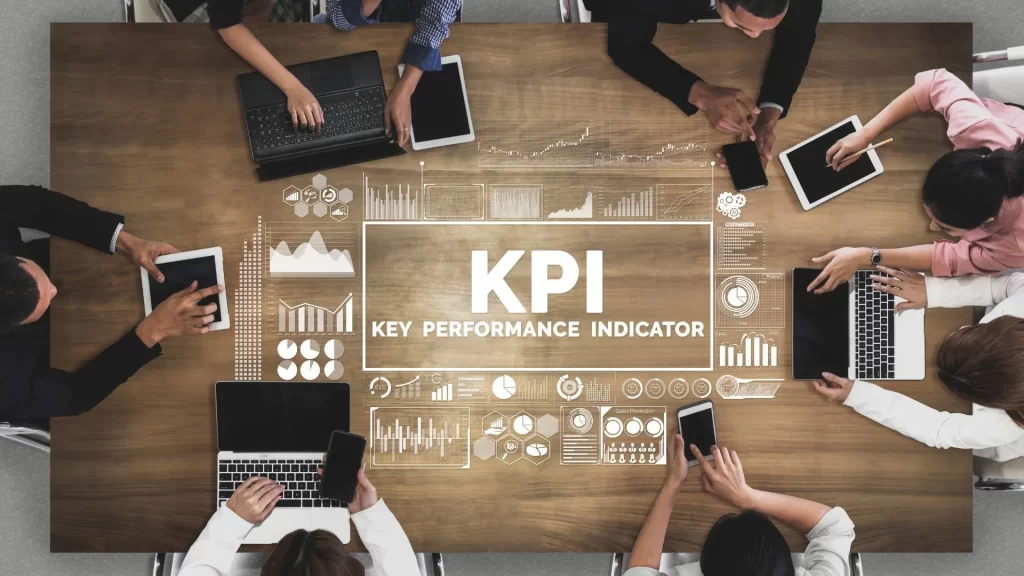
- Define clear KPIs – Focus on measurable outcomes like ROAS, CAC, and LTV.
- Set up tracking tools – Implement GA4, Tag Manager, and Meta Pixel for accurate data.
- Target the right audience – Use intent-based keywords and lookalike audiences.
- Optimize ad creatives – A/B test visuals, copy, and CTAs regularly.
- Retarget effectively – Reach users who viewed products or abandoned carts.
- Enhance website CRO – Simplify checkout and showcase trust signals.
- Automate workflows – Use email/SMS flows for cart recovery and re-engagement.
- Monitor and scale – Analyze metrics weekly and scale winning campaigns.
Following this checklist ensures your performance marketing strategy stays data-driven, efficient, and growth-focused.
Ready to take your ecommerce sales to the next level?
Partner with Anatomy of Brands — and let’s build a performance marketing strategy that delivers real, trackable results.